Lalpurja Transfer Process in Nepal: A Step-by-Step Guide
From token agreement to a new Lalpurja in your name — what actually happens at the Malpot office, who has to be present, what it costs, and where transfers go wrong.
Read the guidePlain-language writing about how property actually works in Nepal — the Lalpurja transfer, land units, document checks, bank loans and where the market is moving.
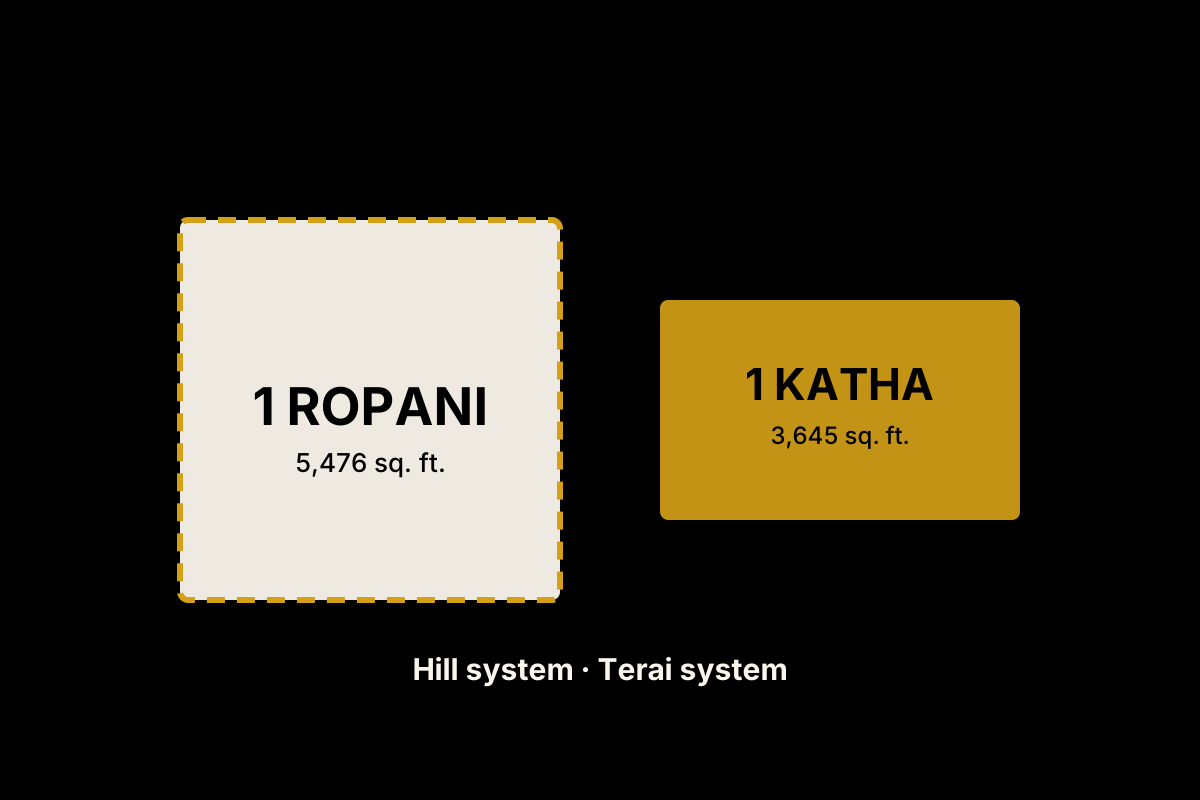
Two measurement systems, one country. What Ropani–Aana–Paisa–Daam and Bigha–Katha–Dhur actually mean, how they convert, and the arithmetic mistake that costs buyers lakhs.
Where valley demand is actually moving — and what each of these five areas costs, offers and risks. Written from transactions we have handled, not from advertising.
A practical checklist for the week before you pay. What to inspect, which office to visit, what a clean file looks like, and the nine red flags that should stop a purchase.
How much banks actually lend, what the sanction process looks like week by week, the valuation gap that catches buyers out, and how to read an offer beyond the headline rate.
Run the arithmetic rather than the received wisdom. Yields, opportunity cost, transaction friction — and the four situations where each option is clearly the right one.
A plot with no recorded access is a plot you may not be able to build on. How to check whether the road to your gate legally exists — and what to do when it does not.
Two calculators we built because we were doing the arithmetic on paper for clients anyway.